I write from the position of someone who built before the rules existed, then helped write the rules. No em dashes, no borrowed frameworks, and always a named first-person stake in the argument.
Most of what appears below starts as a longhand note before it becomes an argument, then a draft, then something I am willing to put my name to.
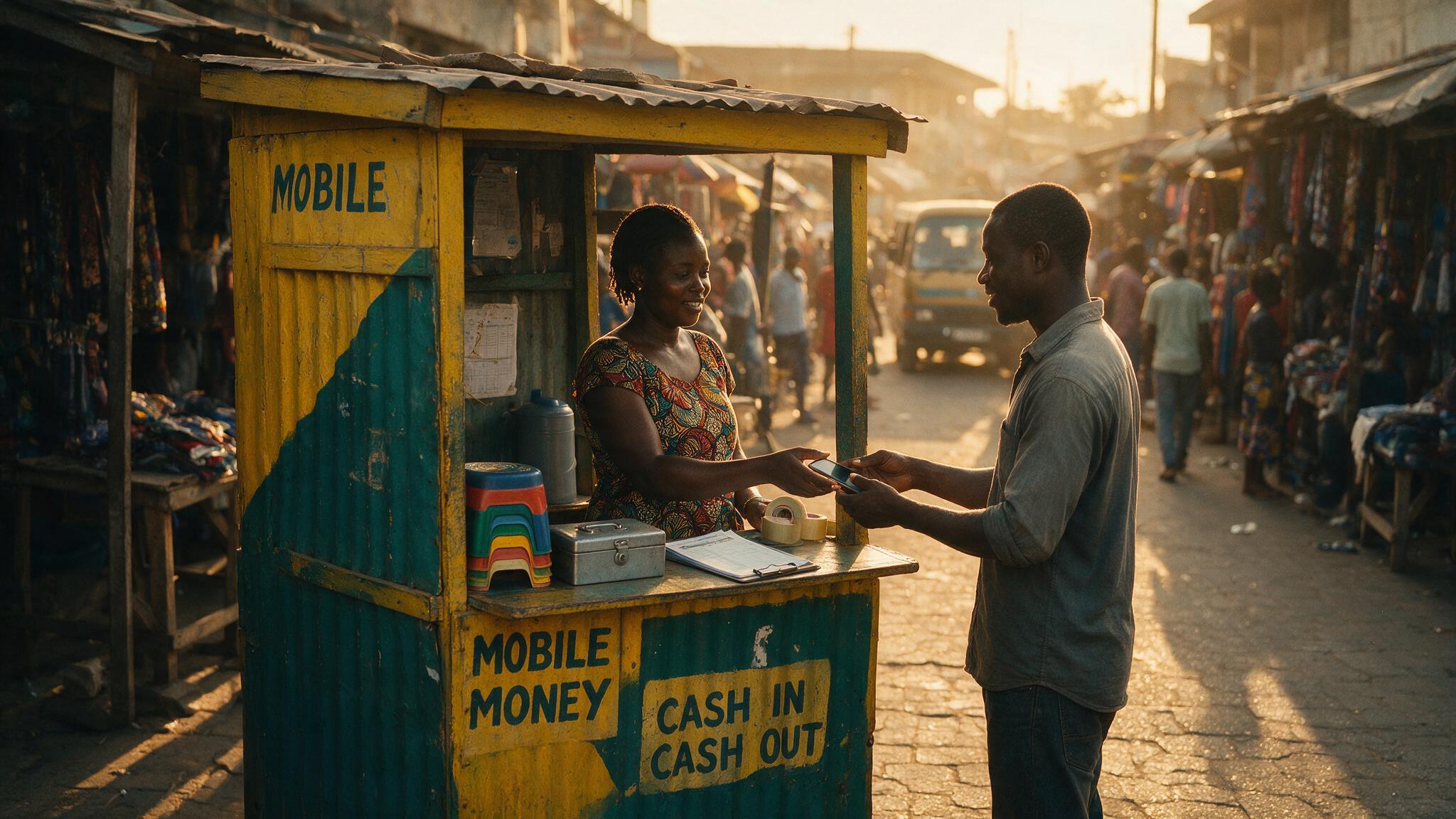
How Ghana built a digital payments market
"In 2008, before Ghana had anything resembling a functional digital payments market, we sold scratch cards. […] We manufactured that bridge ourselves, because there was no other way through the gap."
Written from inside DreamOval's founding and Derrydean's later chairmanship of the Ghana Chamber of Technology, this essay traces the fifteen-year regulatory sequence, from the 2008 Branchless Banking Guidelines through the 2019 Payment Systems and Services Act, that turned Ghana into a market processing an estimated $384.7 billion a year. It introduces two coined concepts: regulatory market-creation, the idea that a regulator can constitute a market before any actor can capture it, and the permission tax, the portion of a founding team's time consumed by institutional navigation rather than product-building. Comparative cases from Kenya, South Africa, and Nigeria show what happens when the sequence goes differently.
Why developing economies consistently misdiagnose the employment problem
"Every government with a jobs problem eventually reaches for the same instrument: more activity extended across more time."
A structural critique of Ghana's 24-Hour Economy and Accelerated Export Development Programme, and of the broader policy reflex it represents. Argues that hour-extension policies consistently miss an architectural layer beneath the premise, and proposes what that layer actually requires.
A new playbook for governing emerging technology
"The world's most advanced economies are writing rules for technologies they are still learning to understand. Developing economies are copying those rules before they have built the institutional infrastructure those rules were designed to protect."
A seven-pillar framework for governments regulating AI and emerging technology from a position of strategy rather than fear, replacing the reflex to borrow rules with the discipline to build institutional capacity first.
A structural reframing of Ghana's employment debate
A companion argument to the roles-versus-hours essay, examining what Ghana's labour market data actually shows once the debate moves past headline unemployment figures.
A programme-level framework for national digital and communications strategy
A working policy framework setting out recommended digitalisation programmes and initiatives, developed alongside Ghana's national digital economy work.
Prior writing and interviews have been cited or featured in Harvard Business Review, Der Spiegel, The Africa Report, Pulse Kenya / Business Insider Africa, How We Made It in Africa, Weetracker, and the official proceedings of the BIS/FIBAC International Banking Conference, where my contribution was cited by the Deputy Governor of the Reserve Bank of India.
Most of my thinking gets sharper in conversation with someone who disagrees, or who is closer to a problem than I am. If you're working on something adjacent to the essays above, pick a track below. If you'd rather send a book or an invitation, that panel sits right next to it, neither one is the "main" option.
You bring a live data point, case, or dispute; I bring the framework and the drafting. Best for a sharp, narrow argument, not a survey piece.
Send a policy position, a venture thesis, or a strategy memo. I'll read it as a critic, not a cheerleader, and tell you where it breaks.
A working session on a product or platform decision: architecture, sequencing, or go-to-market. Informal, working-notes level, not a paid engagement.
Goes straight to my inbox, tagged with whichever track you pick.
A running list of what's currently on my desk is coming shortly. In the meantime, this goes straight to my inbox: a book worth my time, or an invitation to your book club, reading group, or association.